
Kojiscapes Rice Lager @ Fox Tale Fermentation

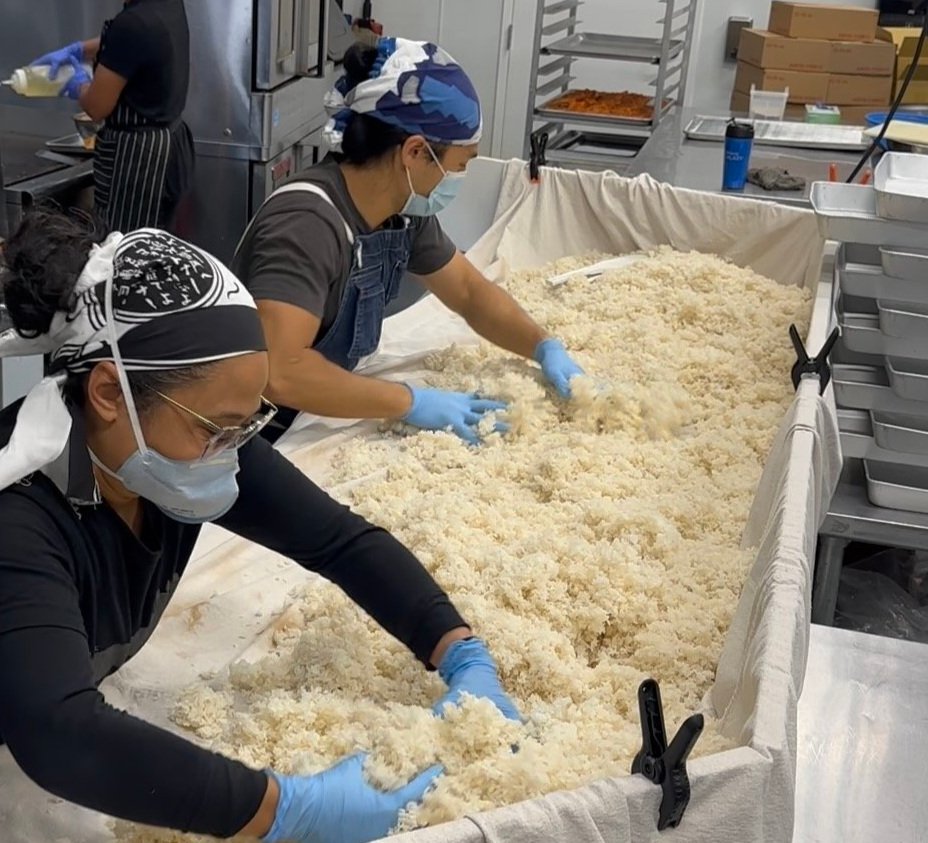
photo credit: Shared Cultures
Kojiscapes, a 5.8% ABV rice lager made with koji, was made possible by the collaboration between Felipe of Fox Tale Fermentation, Kevin & Eleana from Shared Cultures, Rita from Third Space Fermentation, and Simon from Match Point Brewing. We hope you enjoy the dry effervescent body, delicious aromas, refreshing acidity, and taste of Asian pear, dried mango, apple, toasted rice of this special brew. To share and educate people about the exciting world of koji, we prepared this page as a living document which will be updated as we make more progress and announcements.
UPDATE:
North Bay folks can enjoy draft on self pouring taps at The Rewind retro arcade bar in Sebastopol, Sonoma County.
In Santa Cruz, Kojiscapes is available at Lupulo craft beer house and in Oakland, at Degrees Plato.
East Bay folks can find bottles available at El Cerrito Natural Grocery Annex while supplies last.
Release Party Pre Order Bottle Pick Up on Saturday December 9th at Fox Tale Fermentation Project!
White koji (A. luchensis) was selected given the significant amounts of citric acid along with alpha & gluco amylase enzymes produced. Historically this type of koji is used to produce shochu. The traditional koji A. Oryzae used for sake doesn't produce any citric acid. Recently, some sake breweries have experimented using white koji in their sake ferments. White koji typically has slower initial growth so it is recommended to increase humidity and temperature to boost stable initial koji growth ( > 90% Relative Humidity and around 92-95F).

There are many factors that can affect koji growth and the type of enzymes produced (substrate type, shinpaku concentration, rice varietal, incubation conditions, moisture content, heat, humidity, etc.). The main controls in koji production to maximize different enzyme production are: temperature, humidity, aeration, and time. Sake brewers may grow koji to have a different mix of enzymes depending on whether the koji is destined to go into: the shubo (yeast starter) or moromi (primary fermentation mash). The amylase enzymes produced by the koji are very efficient at saccharification. For example, "1 g of pure amylase can saccharify 2 kg of starch within 1 hour at [122F]..." (Food Sci Nutr. 2020 Jul; 8(7): 2995–3003). Amylase production occurs above 95F whereas protease production is produced at a lower temperature range.
We think the most important factor that contributed to making good koji is the attention to detail over the 50 hour period it took to grow. This would mean coming in late into the night or early mornings to ensure the koji growth was stable and healthy.

Normally on brew day, all the grains including adjuncts like rice would have their starches converted to sugars during a short 1 hour mash step. However, high mash temperatures above 140F would denature the koji & its enzymes produced. So instead, we steeped the koji rice during primary fermentation to maximize the effectiveness of the enzymes on the rice as well as impart more of the koji flavors in the final brew. After primary, we transferred to the brite tanks to condition and lager for over a month to crisp up and mature.
The backbone of the rice lager comes from an organic medium grain rice varietal (Certified Organic Kokuho Rose) grown in Sacramento and the San Joaquin Valley by Koda farms. They are 3rd generation Japanese-American family of rice farmers that developed and harvest this heirloom rice varietal.
Further reading:
The Koji making process: temperature, mycelium, and moisture by Keith Wong, 2020
Temperature, water content, and polishing effects on Koji by Keith Wong, 2020
Ueda Koji Production Method by Mike Simons, 2023